
The 2026 Consumer Guide to Comparing Online GLP-1 Care
A neutral guide to comparing total cost, clinical support, treatment formats, refills, and cancellation terms.

Compare what happens before and after the prescription: who evaluates you, where medication comes from, what you will pay, and how you get help. Start with those four questions before comparing promo codes.
Okay, but which provider?
Look for a named clinical provider, a clearly identified dispensing pharmacy, written pricing, and an explanation of follow-up care. Reviews can give you questions to ask, but they do not establish what your experience will be.
- Clinician: Who evaluates me, and how do I contact them?
- Pharmacy: Who dispenses the medication, and where are their contact details?
- Cost: What is included, what costs extra, when am I charged, and what happens if treatment is not prescribed?
- Assessment: What happens after I submit it, and how do I reach the evaluating clinician?
- Follow-up and refills: What is included, what do I need to request, and when?
- Support: Who handles account or delivery questions, and who handles treatment questions?
- Terms: What renews, how do I cancel, and what are the refund rules? Ask for the written policy.
Who handles which questions?Ask about pricing before intakeQuestions about the dispensing pharmacy
What an online GLP-1 program may include
Programs may combine an intake, clinician evaluation, prescription when medically appropriate, medication fulfillment, shipping, supplies, follow-up, and refill support. These pieces may be bundled or charged separately, so ask what the displayed price actually covers.
Before payment, a provider should make possible treatment categories, realistic price ranges, added fees, cancellation terms, refund rules, and the policy for nonapproval easy to find. After clinical evaluation, the patient should receive the exact medication, formulation, dose, schedule, and plan details recommended for them. Paying never guarantees approval or a prescription.
What makes up the complete cost
Separate the medication cost from membership fees, clinician consultations, laboratory work, administration supplies, and shipping. Ask whether each item is included, optional, billed once, or recurring.
An advertised monthly price may be an introductory rate, a starting price for one medication or dose, or the monthly equivalent of a prepaid commitment. It may not represent the complete amount due before treatment, at renewal, or after a plan changes.
- Price charged before clinical review
- Monthly cost and total commitment
- Medication and shipping included or separate
- Laboratory or clinician fees
- Refund terms if treatment is not approved
FDA-approved versus compounded medications
FDA approval applies to a specific product, formulation, route, and indication. Compounded medications are not FDA-approved, and FDA does not review them before marketing for safety, effectiveness, or quality. They should not be presented as generic or equivalent versions of an approved product.
Sources: FDA: Compounding and the FDA · FDA: Unapproved GLP-1 drugs
Semaglutide versus tirzepatide
Semaglutide acts at the GLP-1 receptor. Tirzepatide acts at both GIP and GLP-1 receptors. They have different approved products, indications, prescribing information, contraindications, and dosing schedules. Trial averages do not predict an individual outcome; a clinician should compare the exact products with your health history.
Oral versus injectable treatment formats
Oral and injectable describe how a treatment is taken, not whether two treatments are interchangeable. Schedule, storage, administration, absorption, instructions, and evidence can differ. Confirm the exact medication and formulation after clinical review rather than choosing on convenience alone.
Compare oral and weekly GLP-1 formatsLearn about the oral GLP-1 formatLearn about weekly semaglutide careLearn about weekly tirzepatide care
What to investigate about the dispensing pharmacy
Before payment or shipment, ask for the dispensing pharmacy’s legal name, location, state-license information, contact details, and the process for pharmacy questions. Verify information with the relevant state board of pharmacy. Accreditation or a polished website does not replace active licensure.
Concentration, vial strength, dosing, and intended duration
For a vial, ask for the concentration, total amount in the vial, prescribed dose, measurement units, written administration instructions, storage rules, beyond-use date, and how long the vial is intended to last. Do not copy syringe units or dose instructions from another patient, vial, or online post.
Ongoing clinician access and follow-up
Ask how to reach the clinical team, when follow-up occurs, how refills are reviewed, and who handles side effects versus billing or shipping problems. Confirm the urgent-contact pathway and what happens if treatment needs to be paused or changed. A prescription and a customer-service inbox are not the same thing.
Cancellation, refills, subscriptions, refunds, and multi-month plans
A lower monthly equivalent may require prepaying for several months. Confirm the upfront total, refill timing, automatic-renewal date, cancellation window, refund rules, and what happens to prepaid amounts if a clinician does not approve, changes, pauses, or stops treatment.
A practical comparison table
Use the checklist below for each provider. A clear answer is more useful than a low headline price.
- Total cost: monthly price, upfront total, and possible added fees
- Clinical care: evaluating clinician, follow-up, and urgent contact path
- Treatment: exact product, formulation, route, and regulatory status
- Fulfillment: dispensing pharmacy, shipping, supplies, and delays
- Commitment: renewal, cancellation, refund, and unused medication terms
| Compare | Confirm in writing | Watch for |
|---|---|---|
| Cost | Monthly and upfront totals; every included fee | A starting price without the total commitment |
| Clinical care | Evaluator, follow-up, refill review, urgent contact | Customer support presented as clinical support |
| Treatment | Medication, formulation, route, and regulatory status | A format name without the exact product |
| Terms | Renewal, cancellation, refund, and approval policy | Payment before terms are easy to find |
Red flags to investigate
Save or print this page and record the answers before paying.
- A prescription promised before a clinician evaluates your health information
- A compounded product described as FDA-approved, generic, or equivalent to an approved drug
- The medication, pharmacy, full price, renewal terms, or refund policy remains unclear before payment
- Dose instructions communicated only as syringe units without the product concentration
- No clear path for clinical questions, side effects, follow-up, or refill review
Understand compounded medicationsRead What Is Food Noise?See questions about dispensing pharmacies
Already using another provider? Read the questions to ask before switching providers.
Real answers. Pretty clear.
Frequently asked questions
Should I choose the lowest advertised price?
Not without comparing the expected total cost, medication, clinical support, commitment, and refund terms.
Link to this answerDoes paying mean I am approved?
No. Payment does not replace evaluation by a licensed clinician, and a prescription should be issued only when medically appropriate.
Link to this answerAre compounded GLP-1 medications FDA-approved?
No. Compounded drugs are not FDA-approved and are not reviewed by FDA before marketing for safety, effectiveness, or quality.
Link to this answerWhat should I know before choosing an oral or injectable format?
Confirm the exact medication, formulation, schedule, storage, administration instructions, evidence, and total cost. A format preference does not replace clinical review.
Link to this answerWhat should ongoing GLP-1 follow-up include?
Look for a defined clinical contact pathway, planned follow-up, refill review, side-effect guidance, and clear instructions for urgent concerns or treatment changes.
Link to this answerMedical sources
- 01FDA’s concerns with unapproved GLP-1 drugs used for weight lossU.S. Food and Drug Administration · 2026
- 02Compounding and the FDA: Questions and AnswersU.S. Food and Drug Administration · 2026
- 03Prescription Medications to Treat Overweight & ObesityNational Institute of Diabetes and Digestive and Kidney Diseases · 2026
Keep reading
Related reads

Weight
Semaglutide vs. Tirzepatide
A practical comparison of two weekly medicines, including how they work, what studies can tell us, and how a clinician helps choose between them.

Weight
Oral vs. Weekly GLP-1 Care: What’s the Difference?
A practical comparison of daily oral and weekly vial formats—including routine, convenience, clinical review, and the questions to ask before choosing.
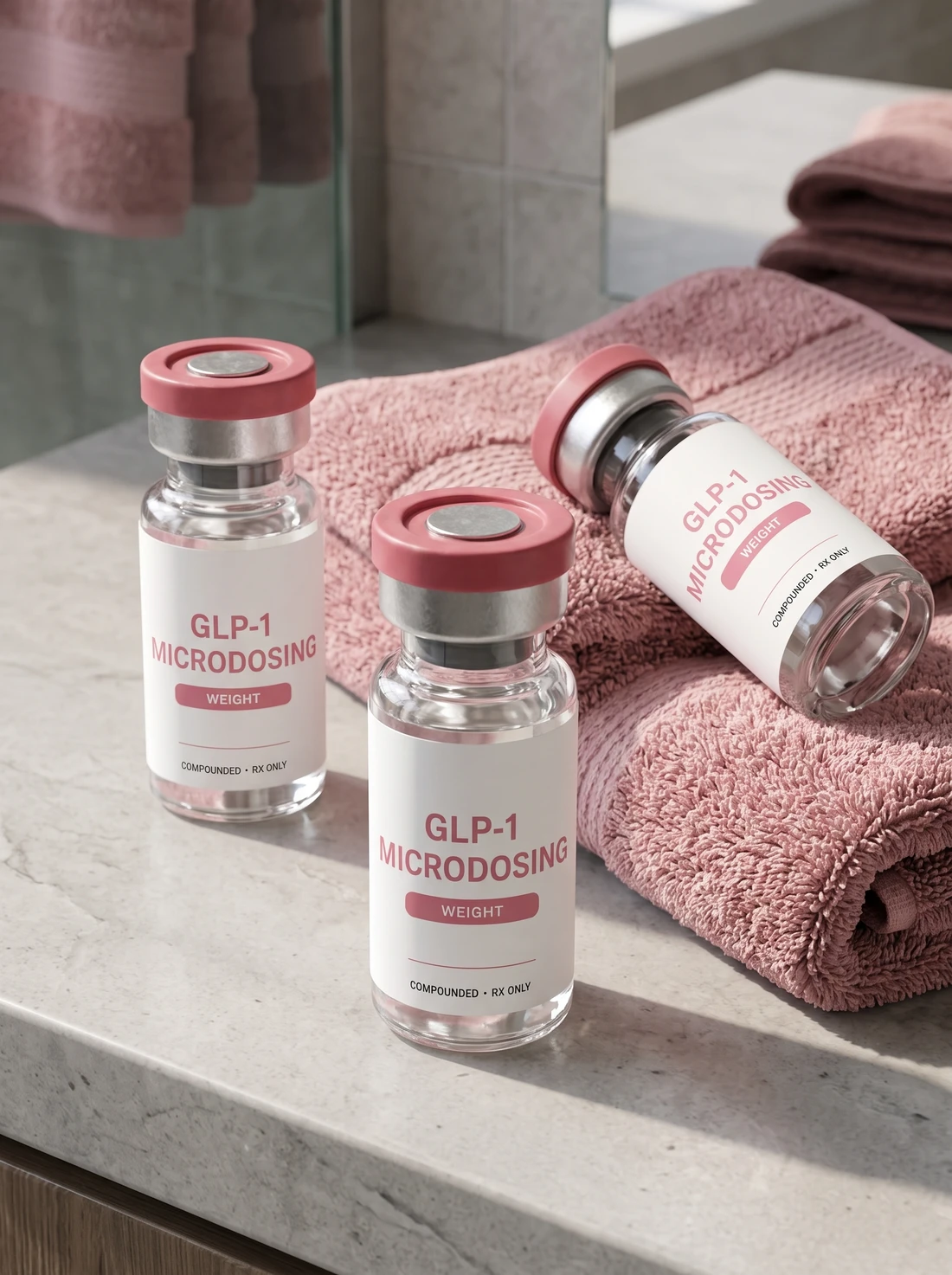
Weight
What Is Food Noise? Why It Feels So Exhausting
What is food noise? Explore persistent food thoughts, how they differ from hunger, and when nutrition or clinician-guided support may help.
Pretty Anonymous
Questions people are asking
Explore Pretty Anonymous →Treatment requires clinician evaluation. Education does not establish eligibility or guarantee a prescription.