
MIC B12 Energy Support for Real-Life Fatigue
That third coffee that barely touches your afternoon slump? The expensive smoothie that somehow leaves you tired and hungry an hour later? MIC B12 energy support is often discussed as a wellness option for people who want more consistent energy, especially when dieting, a packed schedule, or low appetite has made feeling fully fueled harder.
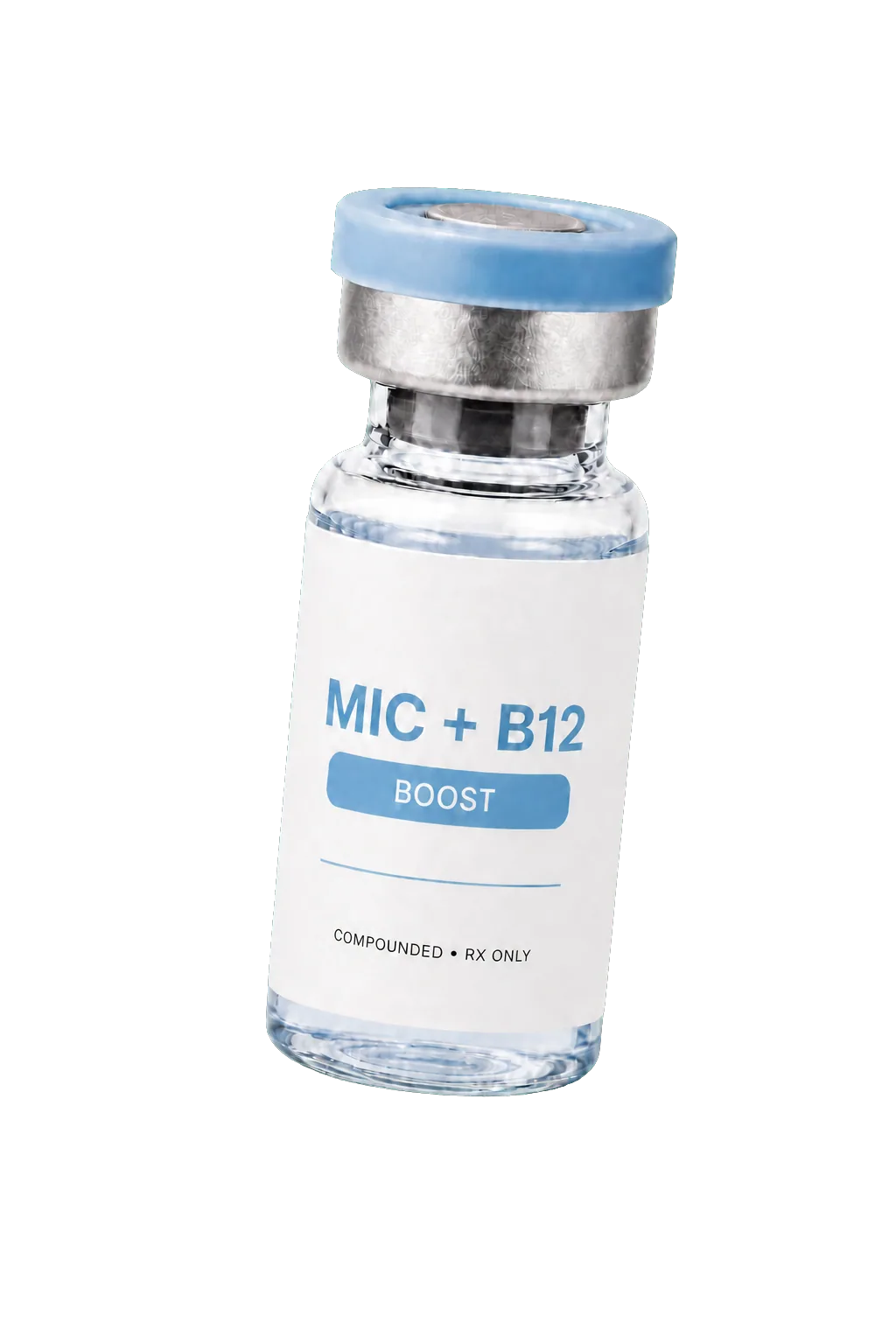
Wellness treatments are coming soon at Pretty Girls Peptide. This guide is for education; it is not an offer of currently available treatment.
But it is not a magic shot for every kind of fatigue. Real energy support starts with asking the right question: Are you under-fueled, low in a key nutrient, dealing with the demands of weight loss, or running on stress and too little sleep? A clinician-guided plan can help separate a wellness goal from a symptom that deserves a closer medical look.
What MIC B12 energy support typically includes
MIC refers to a combination of methionine, inositol, and choline. These nutrients are commonly called lipotropics because they participate in normal metabolic processes, including how the body handles fats. Vitamin B12 is added because it plays an essential role in red blood cell formation, nerve function, and converting food into usable energy at the cellular level.
The exact formula, dose, and route can vary by treatment plan and pharmacy. In a clinician-guided setting, that variation matters. The goal is not to stack every wellness ingredient trending on social media. It is to decide whether a particular formulation makes sense for your health history, current medications, nutrition, and goals.
B12 does not work like a stimulant. Correcting a deficiency can help related symptoms, but NIH guidance does not support B12 supplementation as an energy or performance booster when B12 status is adequate. Persistent fatigue needs evaluation rather than an assumption that another injection is the answer.
Why people consider a MIC and B12 program
Women often look into MIC and B12 support during seasons when their routines have changed. Maybe you are eating less while pursuing weight-management care and want to stay intentional about nutrition. Maybe meetings, school drop-offs, workouts, and dinner logistics have turned your own needs into an afterthought. Or maybe you are simply tired of the Monday reset cycle and want a more thoughtful wellness conversation than, "Have you tried another latte?"
People sometimes explore MIC and B12 programs for energy or weight goals, but the ingredients’ roles in normal metabolism do not establish that this injection blend improves energy or causes weight loss. A clinician can help identify whether a nutrient deficiency or another condition needs treatment.
That said, lipotropic ingredients should not be presented as a shortcut to fat loss. Sustainable body-composition change still depends on the larger picture: appropriate nutrition, adequate protein, resistance training when suitable, sleep, stress, and, for some people, clinically appropriate metabolic treatment. Craving results, not restrictions, also means being honest about what one ingredient blend can and cannot do.
B12 is most relevant when there is a reason to suspect low levels
B12 deficiency can occur for several reasons. Certain dietary patterns, digestive conditions, bariatric surgery history, age-related absorption changes, and some medications can affect B12 status. Metformin and acid-reducing medications are two examples that may be relevant for some patients.
Symptoms such as fatigue, weakness, numbness or tingling, balance changes, memory concerns, or a sore tongue deserve medical attention rather than a casual self-treatment plan. Those symptoms can have many causes, and waiting too long to evaluate a true deficiency is not the chic wellness move.
A clinician may recommend labs, request records, or advise you to speak with your primary care provider depending on your history and symptoms. That is not friction. That is care doing its job.
What results can realistically feel like
The most realistic expectation is support, not a personality transplant by Tuesday. If a provider determines that B12 supplementation is appropriate, some people report feeling less run-down as a deficiency is corrected. Others may value the consistency of a guided wellness routine even when the change is subtle.
Your baseline matters. A person who is skipping meals, drinking little water, and sleeping five hours a night may need foundational changes alongside any clinical program. A person whose appetite has shifted on a GLP-1 medication may benefit from a conversation about protein, calories, nausea management, and micronutrient intake before assuming the answer is simply more energy support.
Be especially skeptical of promises that MIC injections will melt fat, erase fatigue, or replace food. Your body needs actual fuel. No wellness plan should make it easier to ignore ongoing exhaustion, dizziness, poor intake, or rapid unintended weight loss.
A smart way to assess whether this fits your routine
The best question is not, "Will this make me lose weight?" It is, "What is my fatigue telling me, and what support fits my full health picture?" During a private intake and clinical review, be specific about your energy pattern. Is fatigue new or longstanding? Does it show up after meals, during your period, after workouts, or all day? Are you snoring, waking often, restricting food, or taking medications that affect appetite or nutrient absorption?
Share your complete medication and supplement list, too. More is not always better, particularly when you are combining wellness treatments. A licensed clinician can determine whether a MIC and B12 approach is appropriate, whether screening or lab work may be useful, and whether another care path makes more sense.
If treatment is prescribed, follow the dosing and administration instructions exactly. Do not double doses because you have a big weekend, and do not treat injections as interchangeable with the products your friend found online. Compounded and clinician-directed treatments require clear handling, storage, and usage guidance.
Build the habits that make support more useful
MIC B12 energy support tends to make more sense as part of a routine with enough basics in place. Prioritize protein at meals, especially if your appetite is lower than usual. Pair it with fiber-rich foods and regular fluids. Keep resistance training or gentle movement in the mix when your body and clinician say it is appropriate.
Sleep deserves its own spotlight. If you are scrolling until midnight, waking at 5 a.m., and expecting a wellness injection to negotiate with your nervous system, you are asking a lot of one tool. Start small: a consistent bedtime cue, a protein-forward breakfast, a water bottle within reach, or a short walk between meetings can make a noticeable difference over time.
Safety and when to pause the wellness conversation
Any injection-based or prescription wellness program should begin with an honest health review. Tell your clinician about pregnancy, breastfeeding, allergies, kidney or liver concerns, chronic conditions, past reactions to injections, and all medications or supplements you use. Eligibility is personal, and a treatment that fits your coworker may not fit you.
Seek prompt medical care for severe or concerning symptoms such as chest pain, shortness of breath, fainting, significant weakness, new neurologic symptoms, or signs of a serious allergic reaction. Persistent fatigue also deserves evaluation when it is unexplained, worsening, or affecting daily life. Sometimes the most empowering next step is not another wellness add-on. It is getting a clear answer.
Feeling like yourself again is rarely about pushing harder. It is about giving your body the right information, the right fuel, and the right level of clinical support - with zero guilt and no pretending exhaustion is just part of being busy.
Medical sources
- 01Vitamin B12 fact sheetNIH Office of Dietary Supplements
- 02Understanding the risks of compounded drugsFDA
Keep reading
Related reads

Weight
Why Am I So Tired on a GLP-1—and When Should I Be Concerned?
How reduced intake, hydration, sleep, adjustment, and other health factors can shape fatigue—and which symptoms deserve care.
Weight
Protein and Strength on a GLP-1: Keep Nourishment in the Picture
A smaller appetite still needs nourishment. Build a practical plan for protein, strength, and the days eating feels harder.
Pretty Anonymous