
NAD Nasal Spray: What It Can and Can’t Do
That 3 p.m. crash is not always a personality flaw, a coffee problem, or proof that you need to "try harder." When you are sleeping enough on paper but still dragging through your workouts, meetings, and social plans, it makes sense to look for answers. NAD nasal spray has become a buzzy option in the energy and cellular-wellness conversation, but the internet tends to make it sound simpler - and more proven - than it is.
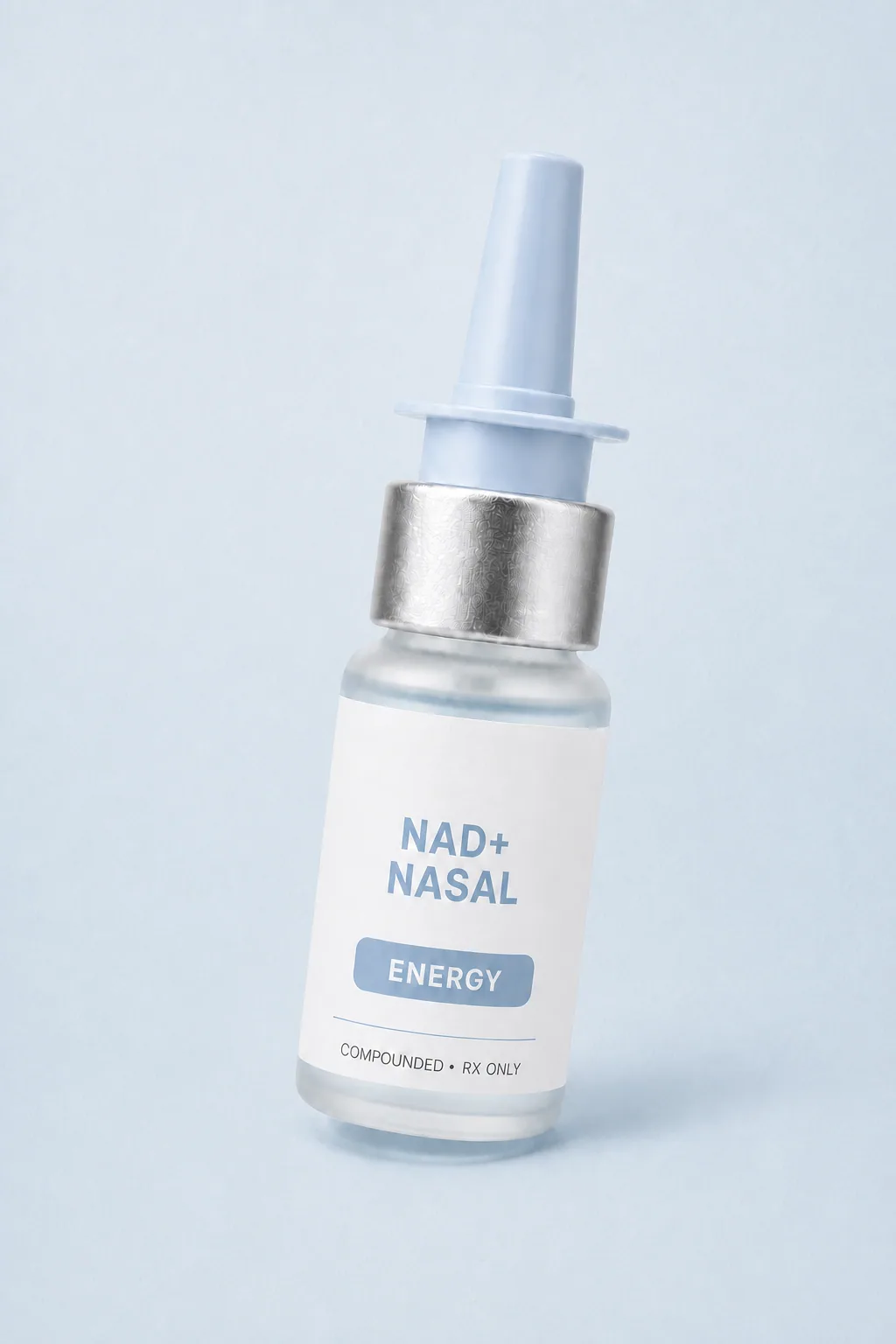
NAD+ is a molecule your body already makes and uses in essential cellular processes. A nasal spray may be a convenient, clinician-guided way for some adults to explore NAD+ support, but it is not an instant energy button, a replacement for sleep, or the right choice for everyone. Here is the clear, no-group-chat-rumors version.
What is NAD nasal spray?
NAD stands for nicotinamide adenine dinucleotide. In its oxidized form, NAD+, it acts as a coenzyme that helps cells convert nutrients into usable energy. It also participates in processes related to cellular repair and metabolic function. Your NAD+ levels can shift with age, illness, stress, alcohol use, sleep disruption, and overall health, though the relationship between those changes and how you feel day to day is not always straightforward.
NAD nasal spray is a formulation designed to be administered into the nose, typically according to a clinician’s prescribed schedule. It is distinct from oral NAD-related supplements, intravenous NAD infusions, and skincare products with similar-sounding names. Those options have different ingredients, delivery methods, risks, costs, and evidence behind them. They should not be treated as interchangeable.
The nasal route is appealing because it is quick, private, and easy to fit into a real routine. No appointment chair. No carving half a day out of your calendar. But convenience is only a benefit when the product itself is appropriate, properly sourced, and used under qualified clinical guidance.
Why women are asking about NAD+ for energy
A lot of women do not need another lecture about drinking water. They are already carrying a water bottle, buying the expensive smoothie, trying to get protein in, and wondering why their energy still feels flat. They may be balancing work deadlines, family logistics, training, travel, and the very real mental load of keeping life moving.
That is why NAD+ has gotten so much attention. It is associated with cellular energy production, and people hope that supporting NAD+ will translate into better daily stamina, mental clarity, exercise recovery, or a more resilient feeling overall.
Some people do report feeling more energized or focused with clinician-guided NAD+ therapy. Others feel little difference. Human research specifically on NAD+ nasal spray remains limited, and there is not strong evidence that it reliably treats fatigue, reverses aging, causes weight loss, or fixes brain fog for everyone. A polished before-and-after story is not the same thing as clinical proof.
That does not make the conversation pointless. It means the right question is not "Will this change my life by Friday?" It is "Given my health history, goals, symptoms, and current habits, is this a reasonable option to discuss with a clinician?"
What NAD nasal spray may support - and what it won’t
When it is clinically appropriate, NAD+ support may fit into a broader wellness plan for someone seeking help with everyday energy and cellular wellness. The key word is broader. The best plan is not built around one spray bottle.
If your low energy is related to inadequate sleep, under-fueling, a demanding schedule, or recovery after a particularly stressful season, your clinician may help you look at the whole picture. That can include nutrition, movement, sleep quality, medication review, and whether symptoms warrant testing or follow-up with your primary care provider.
NAD nasal spray is not a substitute for evaluating persistent or new fatigue. Iron deficiency, thyroid conditions, depression, sleep apnea, medication effects, infections, and many other issues can show up as exhaustion. If you are breathless, fainting, experiencing chest pain, having severe headaches, or noticing a sudden and significant change in energy, skip the wellness workaround and seek timely medical care.
It is also not a GLP-1 medication and should not be positioned as a weight-loss treatment. Feeling more capable of sticking to your routines can matter, of course. But no clinician should promise that NAD+ will silence food noise, melt fat, or replace an evidence-based metabolic care plan when one is indicated.
How clinician-guided use should work
The right starting point is a private health assessment, not a viral protocol copied from someone with a totally different body and medical history. A licensed clinician should review your goals, allergies, current medications and supplements, relevant medical conditions, and whether you are pregnant, breastfeeding, or trying to conceive.
If NAD nasal spray is prescribed, follow the dosing and storage instructions exactly. Do not take extra sprays because you have a big presentation, a long flight, or a Monday that feels personally offensive. More is not automatically better, and changing your dose without medical input can make it harder to know what is helping or causing side effects.
Product quality matters too. NAD+ therapies may be prepared through compounding pharmacies rather than sold as FDA-approved finished drug products. Compounded medications can be appropriate when prescribed for an individual patient, but they are not the same as FDA approval. Your care team should be transparent about what is being prescribed, how to use it, and what monitoring or follow-up is recommended.
At Pretty Girls Peptide, that is the point of clinician-guided care: treatment decisions should feel personal, not like you grabbed a trending product from a digital shelf at midnight.
A realistic timeline for noticing changes
There is no universal timeline. Some people notice a subjective change in energy or focus relatively soon, while others do not notice much at all. Expectations should be calm and specific: track how you feel across a few weeks, not just during one unusually productive Tuesday.
Consider noting your sleep, afternoon energy, workouts, mood, hydration, and any symptoms while using a new therapy. This gives your clinician something more useful than "I think it maybe worked?" It can also reveal whether your energy dips are more connected to missed meals, poor sleep, or an overly packed schedule than to any single intervention.
Potential side effects and who should be cautious
Every treatment has trade-offs, including wellness-focused ones. Reported side effects with intranasal products can include nasal irritation, congestion, sneezing, runny nose, headache, nausea, or a feeling of restlessness. Individual responses vary based on the formulation, dose, and the person using it.
Contact your prescribing clinician if side effects are persistent, bothersome, or worsening. Seek urgent care for signs of a serious allergic reaction, such as trouble breathing, facial swelling, widespread hives, or severe dizziness.
Extra caution is especially warranted if you have chronic nasal conditions, a history of severe allergies, complex medical conditions, or take multiple medications. Pregnancy and breastfeeding deserve a separate conversation because safety data may be limited. This is not the moment for "my friend used it and loved it" to become your medical plan.
How to decide whether it is worth exploring
NAD nasal spray may make sense to discuss if you want a convenient, clinician-supervised addition to an already thoughtful wellness routine and you understand that results can vary. It may be less appealing if you are looking for a guaranteed fix for significant fatigue, are not willing to address sleep and nutrition, or have symptoms that first need a medical workup.
Before starting, ask practical questions. What specific goal are we trying to support? What does success look like after a reasonable trial? What side effects should prompt a call? Is this medication compounded, and how should it be stored? What other causes of low energy should I rule out?
Those are not "high-maintenance" questions. They are the questions already in your group chat, and you deserve answers grounded in your actual health.
Energy support should make your life feel more livable, not turn wellness into another full-time job. Start with care that takes your symptoms seriously, keeps the claims honest, and helps you feel like yourself again - with a plan that has room for both science and real life.
Medical sources
- 01Understanding the risks of compounded drugsFDA
- 02NAD+ metabolism and its roles in cellular processes during ageingNature Reviews Molecular Cell Biology
Keep reading
Related reads

Energy
NAD+ and Everyday Energy
What NAD+ does in the body, what human research can and cannot show, and how to approach an energy conversation without miracle claims.

Weight
Why Am I So Tired on a GLP-1—and When Should I Be Concerned?
How reduced intake, hydration, sleep, adjustment, and other health factors can shape fatigue—and which symptoms deserve care.
Pretty Anonymous